

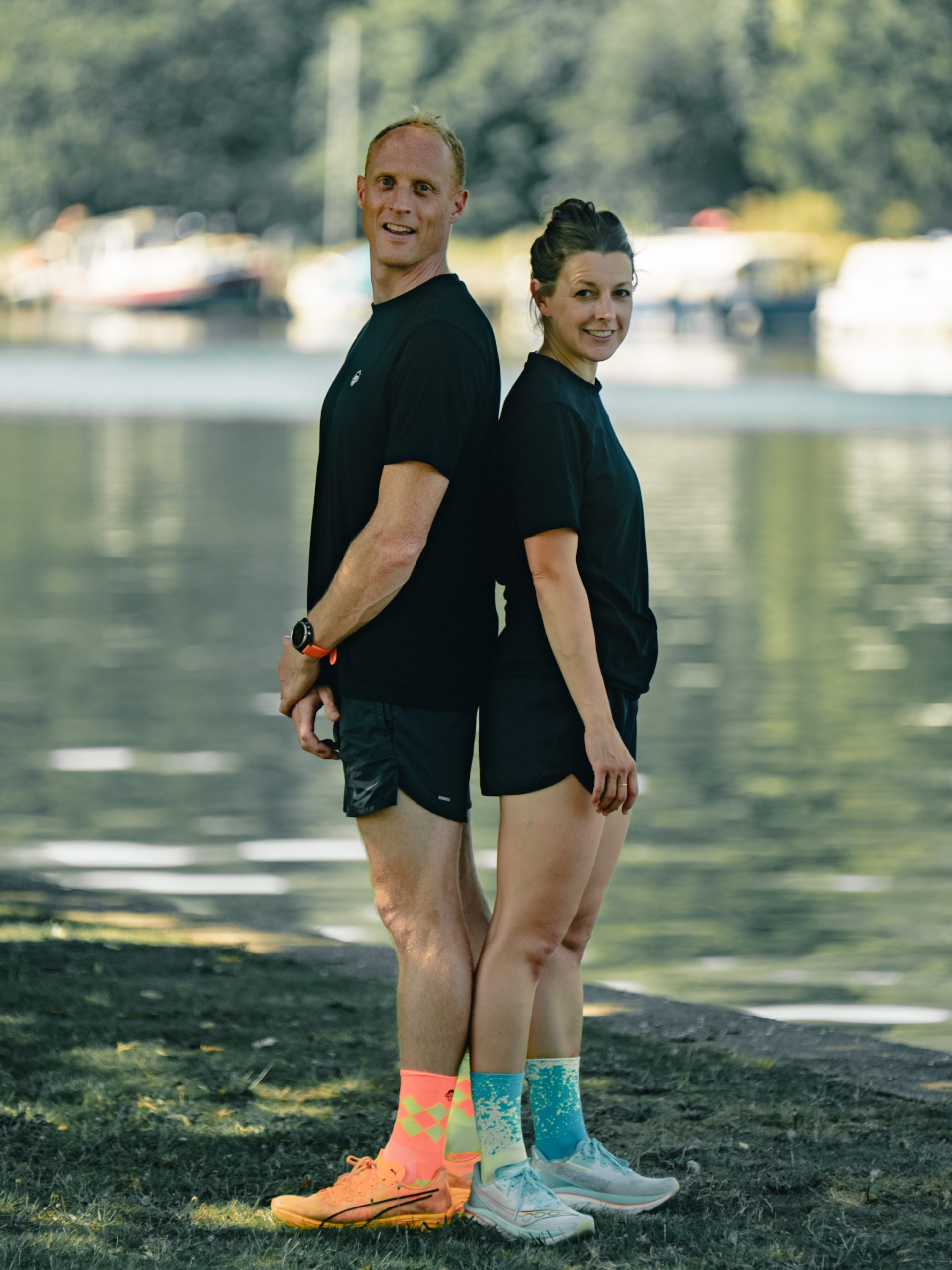
Nine years ago, James and Lianne Carvell set out to raise £3,000 for the MS Society. What they built instead was a purpose-led business with multiple revenue streams, donations of more than £45,000 and a range of socks that stop people in the street.
Published:
13.10.2026
Writer:
Fiona Shaw
None of it was planned – it all started with James’s multiple sclerosis diagnosis. As a doctor, he understood the evidence around neuroplasticity and activity – and how being active helps people manage their symptoms. He later moved from anaesthetics to general practice – a shift that, like Monkey Sox itself, gives him more chances to talk to people about living with MS.
1. Turn the shock into a shared project
James was diagnosed with MS in 2016, aged 30. “It was a massive shock to us, but was also a prompt to do something that we’d always talked about,” he says. “It gave us that impetus to set up something together.” The diagnosis wasn’t something they coped with quietly, it became the reason to do the thing.
2. Let the product carry the meaning
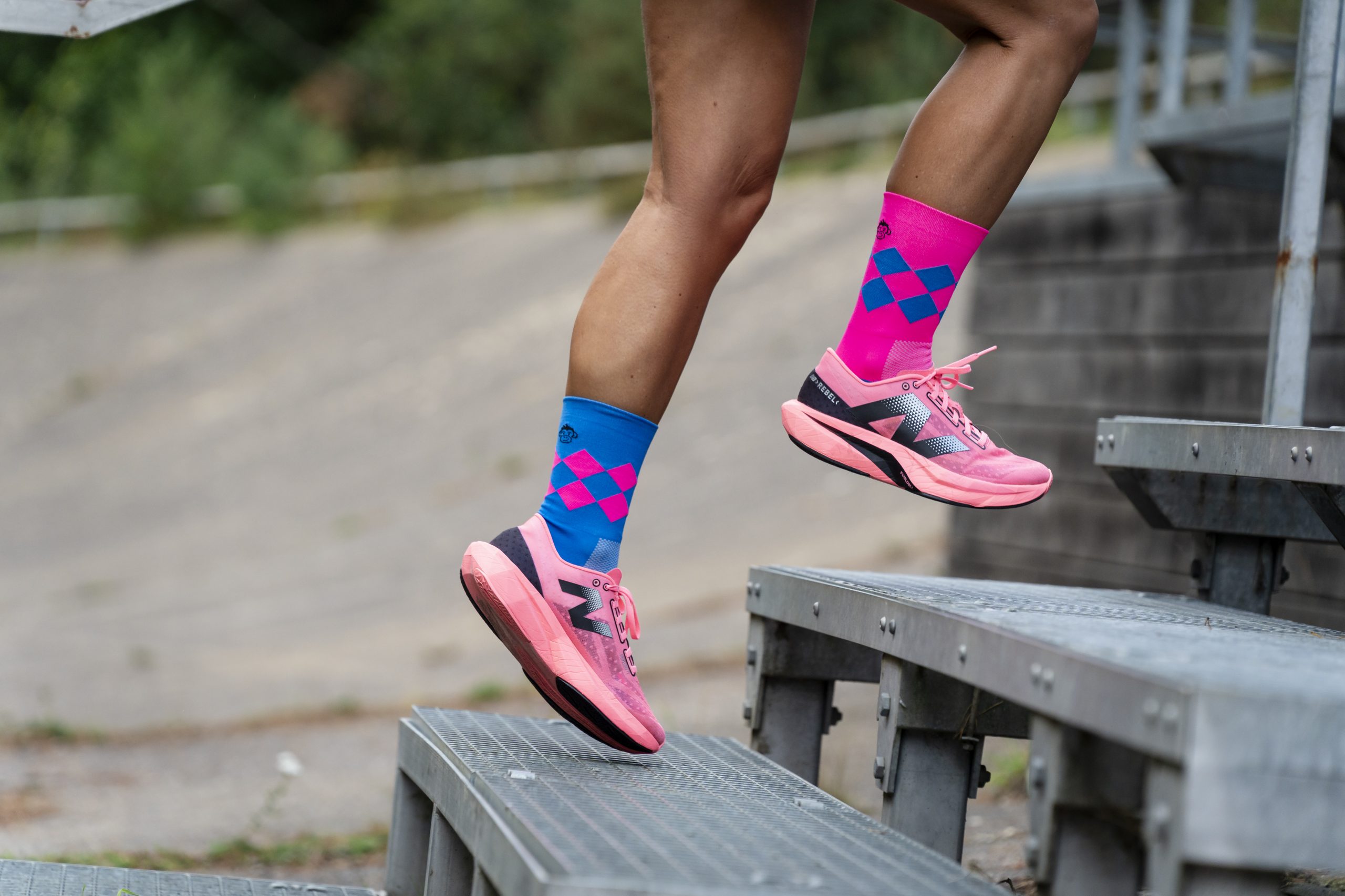
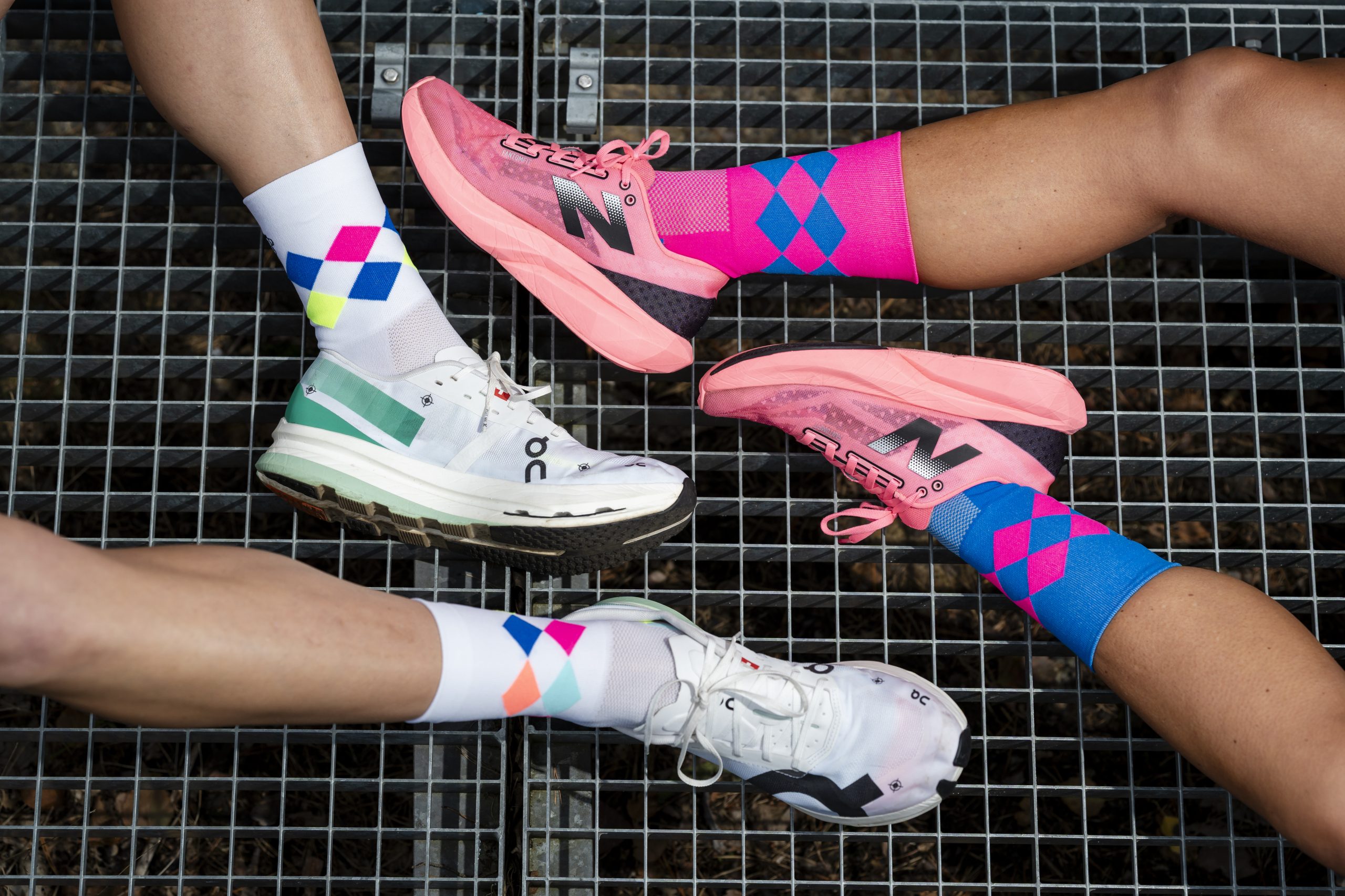
The socks are mismatched on purpose – one colour left, another right, “to represent how MS affects the body differently, left and right,” says Lianne, whose background is in fashion design.
“It’s completely intentional.” Nobody has to ask what the brand is about – the socks show it before either founder explains.
3. Give a heavy subject an easier way in
“It was really hard to speak to friends and family about my diagnosis,” admits James. “At the time, people’s perception of multiple sclerosis was that of someone with reduced mobility and difficulty doing a range of daily tasks. People were afraid to bring it up and I didn’t know what to say. And then we had these socks where we could talk about how things felt different for me, left and right. It made things really easy to explain.”
As Lianne describes them, “They became a bit of a mediator between a really difficult topic.”
4. Keep your name off it and be honest about the cost
Monkey Sox carries no founder name – a deliberate choice that let strangers in Toronto and Auckland own the story as much as anyone in Teddington.
But standing at a stall at running events also meant absorbing other people’s grief and fear too. While James took strength from “people out there going through the same thing as me… a reason to talk about it,” Lianne admits it was hard, too.
“I think I’ve definitely felt very vulnerable along the way because we have worn our heart on our sleeve, especially at the beginning,” she says.
“I’d come back from these events selling socks and be exhausted and wiped out because emotionally we’d given so much.”
5. Fix the ethos early and don’t move it
Eight years in, the two founding aims haven’t shifted an inch: “inspiring activity for better health and making MS an easier conversation,” says James.
The logo has changed; the team has grown – but that purpose hasn’t. (Look closely and you’ll find speech marks in the monkey’s earlobes – they’ll always be there because they represent starting a conversation.)
6. Make the product good enough to earn the story
Lianne’s background in fashion design means this wasn’t a compromise they’d consider. “This is a product that will last,” she says. “We have elite athletes wearing them… ultra marathoners.”
That quality is deliberate and specific: every pair has been made in the same family-run Portuguese factory for seven years, now into its fourth generation. “It needs to be a quality product or it wouldn’t work,” adds James.
7. Step back and let others tell the story
The early years saw James and Lianne on the front line – or the finish line – at every event, having every conversation themselves. But that’s changed as they’ve grown: “We trust people to tell the story in their own words,” says Lianne.
And the team who’ve joined them weren’t hired cold – they arrived already customers: “We’ve met everybody because they’ve already worn and bought Monkey Sox,” she adds.
8. Don’t rely on a single route to market
“We have four revenue arms,” says Lianne – e-commerce, retail, events and collaborations, each doing a different job.
Events are the most expensive and the hardest to control, but they’re where the stories start, while retail builds quiet trust. The website turns both into sales.
9. Let the community look after its own
This is the part no business plan can manufacture. Runners spot the socks on a stranger mid-race and comment and spectators shout encouragement to people they’ve never met, purely because of what’s on their feet.
“We chase down people in Monkey Sox at our local ParkRun,” admits Lianne, while James happily confuses runners by thanking them for wearing the socks.
Like a secret handshake – or community code – James and Lianne have made something distinct enough and honest enough for people to recognise each other by it.
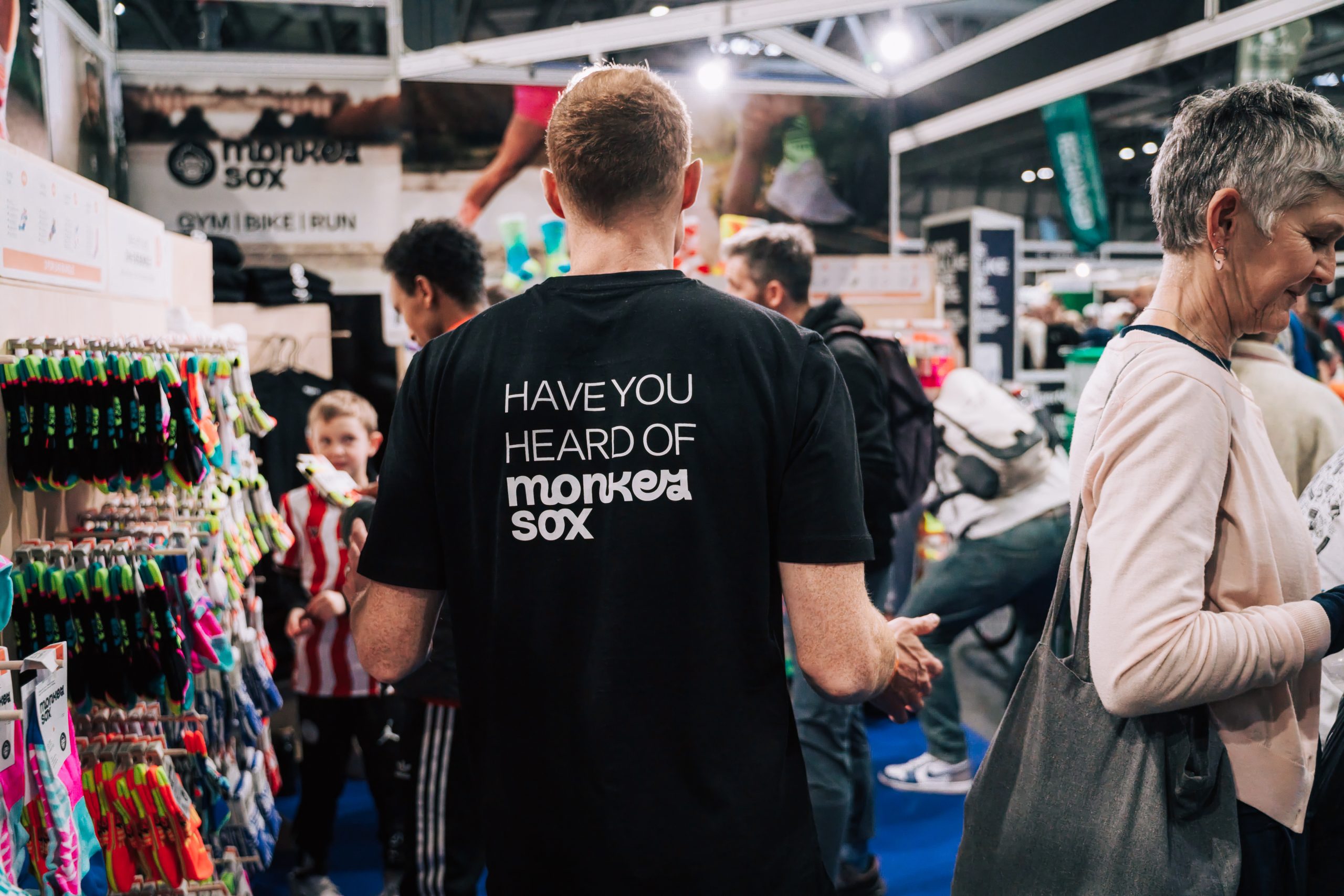
Monkey Sox donates 50% of its profits to MS Society, MS Trust and MS UK. Find out more at monkeysox.org.