


In an age marked by mass production and overconsumption, rethinking the fashion industry is vital. Eva Tinsley talks to Bob Shankly, founder of responsible jeans brand MTTR.
Published:
15.04.2026
Writer:
Eva Tinsley
As a teen, skinny jeans were a staple piece in my wardrobe. As I got older, this shifted to ‘mom’ jeans which offered a straight leg fit and then, eventually, baggy jeans. Now, I can walk into nearly any high-street retail chain and find an array of jean options at my disposal. They will cater to different waist heights and washes. I can find bedazzled jeans or flared jeans. A quick look in my wardrobe will reveal that most of my jeans are made in Bangladesh from 100% cotton, a fibre that often requires intensive water consumption and pesticides to cultivate. Denim is a classic material, synonymous with images of the wild west and cowboys. But this doesn’t make it immune to the clutches of fast fashion’s rapid trend cycles. Ubiquitous as it is, denim is part of the mass production problem that contributes to excessive waste and environmental impacts.
But what if we could change that? Bob Shankly, founder of MTTR, is asking the same question. After a period of illness which led him to leave his much-loved job at a UK-based denim company, Bob started thinking about founding his own denim brand: “It was an idea I’d had for many years but the question I’d always ask myself was ‘does the world need more jeans?’ Of course, the answer is ‘no’. But I realised I was asking myself the wrong question,” Bob explains. “The question was, if I’m making something the world doesn’t need, how will I make a difference? That was the starting point for MTTR.”
Bob set out to design a jean that didn’t cost the earth. This journey was not without its challenges. “It was a whole process of finding a thread which didn’t use polyester, finding a label that used 100% recycled cotton and finding a denim which used 100% recycled cotton,” Bob recalls. “I had a denim lined up and then at the eleventh hour they changed the blend and introduced a virgin fibre which meant I couldn’t use it. All of a sudden, I didn’t have a denim, I didn’t have a jean – I didn’t have a brand.”
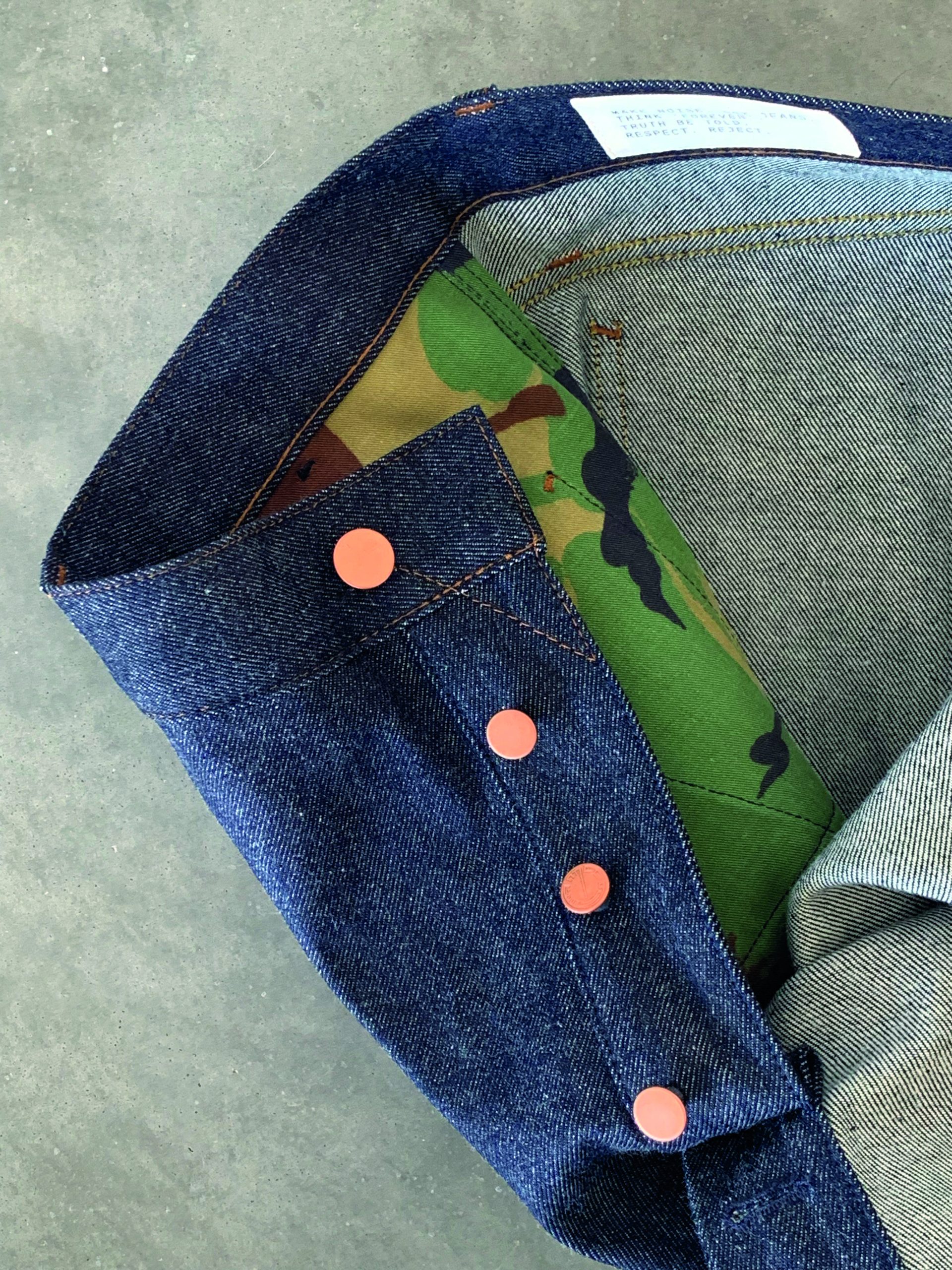
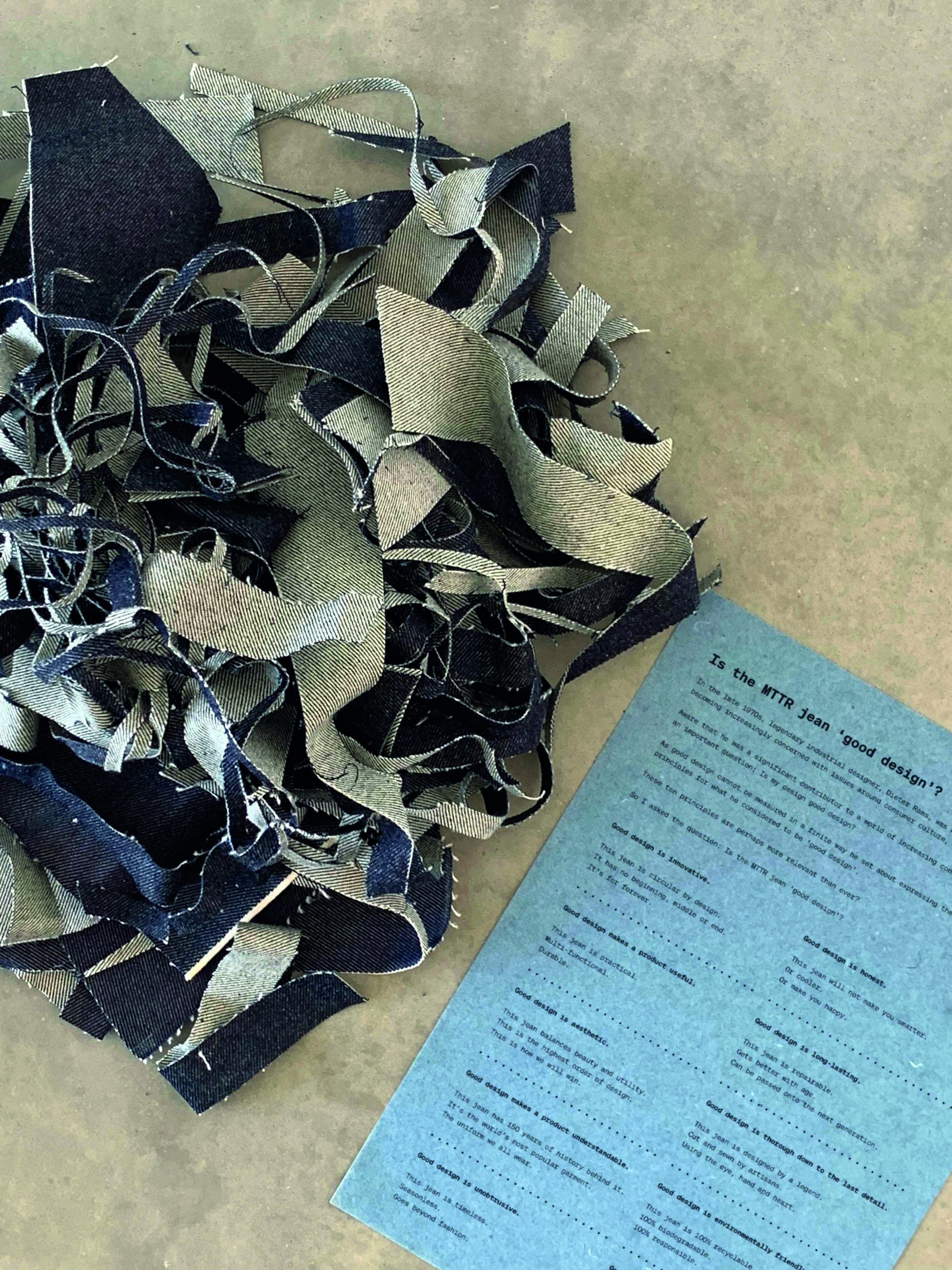
Luckily, Bob had the help of Mohsin Sajid and Sadia Rafique who run London based denim consultancy Endrime. They contacted Cone Denim, which had a new 100% recycled post-industrial waste cotton available. Now, MTTR is the first brand to use it for its inaugural design, the M1 jean. “The denim Gods were shining on us that day. It was all down to Mohsin and Sadia. They are the most forward thinking, open and sharing team in denim,” he says. To make the regenerated denim design a reality, Bob uses Black Horse Lane, a London-based craft denim maker. Together, they’ve prioritised the quality of the jeans, from the stitching to the tailoring. The M1 jean is intended to sit outside of trend cycles, offering a unisex, classic and practical design.
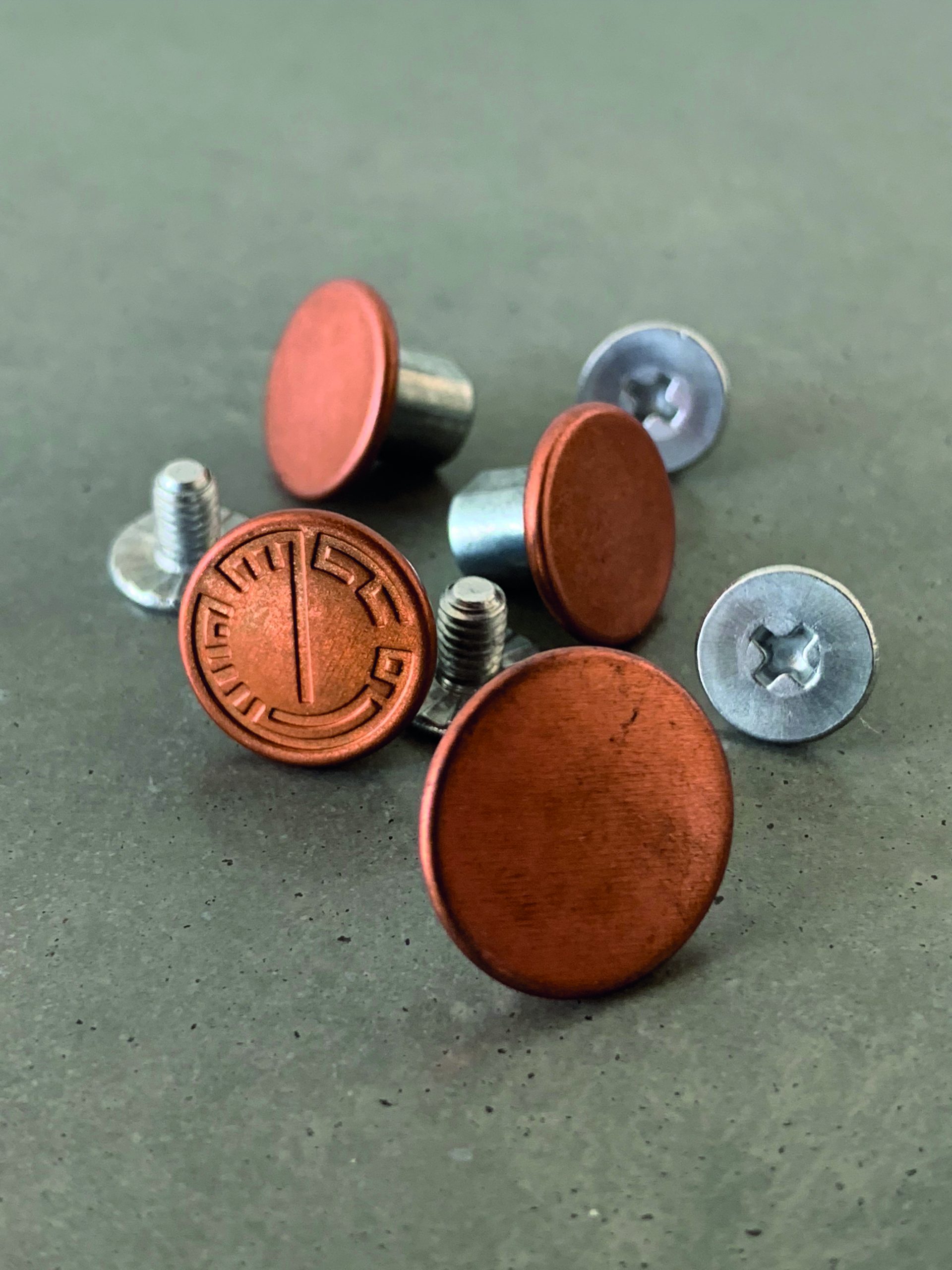
It isn’t just the fabric that can make or break a jean’s environmental reputation. Denim is in the details, from its metal rivets to its buttons. These components are essential to a jean’s iconic look – but also mean that the material they are attached to becomes non-recyclable, condemning huge portions of discarded denim to landfills and incineration.
Designing a jean for disassembly was therefore integral to MTTR’s goal. Bob wanted to create detachable buttons for his forward-thinking jean to ensure they could be easily removed for recycling purposes. Fortunately for him, they already existed. All he needed to do was look to the past to discover ‘Bachelor Buttons’, created in the 1850s so unmarried men could fix their waist overalls without needing a needle and thread. Bob explains, “I thought we could design this new thing that could wow the world, but it’s actually been done before and probably better than I would have done,” he smiles.
I ask Bob about what the value of looking to the past has been for him and MTTR. He quotes environmentalist, David Browser “the solution to a lot of the world’s problems is to turn around and take a forward step.”
There’s something humbling in this realisation that the past can often hold the answers we seek for the future.
Bob expands, “we in the Global North are obsessed with the ‘cult of newness’, which is all part of the engine that’s driving us towards the edge of the cliff. I’d say the value of looking back is that it quietens our own cleverness. People know that the wisdom is in the past, if only we’re prepared to turn around and look at it.”
He shows me a detachable button attached to a patch of denim. It clips off easily by popping off the cap. The mechanism is incredibly simple to look at but has the potential to make a huge difference.
As innovative as it is, the M1 jean isn’t perfect. MTTR is honest about the waste that is produced from the pattern, and eager to do better: “Looking ahead, with help from Mohsin and Sadia, we’re designing a second jean which I believe will be a big part of denim’s future,” Bob tells me. “It’s a zero-waste pattern jean and is nothing short of a work of art. It’ll be called the M0”. Although MTTR is planning ahead, navigating the future is tough for many individuals and businesses right now.
Bob speaks on this difficulty: “Right now, in the global fashion industry, consumers are being pushed towards two extremes. There’s price obsession driven by the likes of Shein and there’s hype obsession, driven by the likes of big fashion houses. MTTR doesn’t do either of those things. We need a kind of wind to turn on us. But we have to understand that the cost of living is insane. People are struggling, so the idea of buying a £200 pair of jeans means we’re probably not in that space, and maybe not in that space for a number of years. So, it’s slow-going.” Bob notes. “But slow-going is still going.”
"I realised I was asking myself the wrong question. The question was, if I’m making something the world doesn’t need, how will I make a difference? That was the starting point for MTTR.”
Part of this ‘slow’ nature of business that Bob is embracing is the publication of printed catalogues. They come out each season, accompanied by photographs of nature and reflective pieces of writing. Through this it’s clear that MTTR isn’t just interested in creating jeans, but also in creating a community. It’s not an easy feat. As Bob tells me, “it’s a David and Goliath story.” He uses the example of Nike vs Adidas to explain: “Nike wasn’t always the king of sportswear. Adidas dominated the market for decades. But Adidas didn’t have Jeff Johnson, Nike’s first employee. Johnson didn’t just sell running shoes. He tracked every customer like it was a mission from God. He sent them letters, made follow-up calls, and wrote thank-you notes. And when those runners started to breakthrough, it was Nike they remembered.”
Bob reflects on this importance of creating community: “I think when people get bored of seeing AI in everything, they’ll want to know there’s a human behind their interaction. So, I’m betting on being ‘more human’ to build a community. That’s the reason I do this seasonal printed catalogue.”
It’s this community that is integral to upholding what MTTR stands for. Bob makes it clear that “MTTR doesn’t ‘do’ sustainability. Sadly, thanks to sustainability marketing, a very clear and guiding principle has become the accepted term for ‘we’re-doing-something-vaguely-better-for-the-planet-whilst-also-doing-lots-of-really-dumb-things-but-we-think-our-customers-and-shareholders-will-like-it’”. Instead, Bob prefers to focus on responsibility.
When purchasing a pair of MTTR jeans, customers are met with a button that asks them to think about their purchase, to consider whether they really need it. For those that do buy a pair of jeans, when they’re finished with them, they can return them to MTTR to be transformed into something new.
Responsibility isn’t always easy. Bob himself owns the term ‘climate hypocrite’. He explains, “I think we have to accept that all of us, certainly in the Global North, are born into systems of extraction, consumption and waste. For someone who’s trying to find a better way to live with the more-than-human world, it’s messy and confusing and at times feels hopeless. I think showing up imperfectly is our only option.”
By prioritising responsibility over sustainability, MTTR asks for a shared accountability between customer and producer, a practice that could set an example for other businesses.

In a world obsessed with mass production and chasing numbers, MTTR limits the number of jeans produced. Bob calls it the ‘enough’ number: “The number of jeans I need to sell in a year to keep the lights on and not a jean more. The only number I’m obsessed with is zero. And that’s zero waste, zero pollution, zero impact.”
Through its use of materials, attention to detail, and production processes, MTTR aims to become the second most responsible jeans company in the world. Second only, because as Bob acknowledges, “the most sustainable jean is the one you already own.”
Image credits: Bob Shankly, MTTR
Find out more about MTTR on their website: https://mttr.co.uk/